
Some places make you feel like a traveler, but Leptis Magna makes you feel like an explorer.
Located just outside Al Khums City, this ancient Roman city doesn’t whisper history, it shows it boldly, in marble and stone, under the wide Libyan sky.
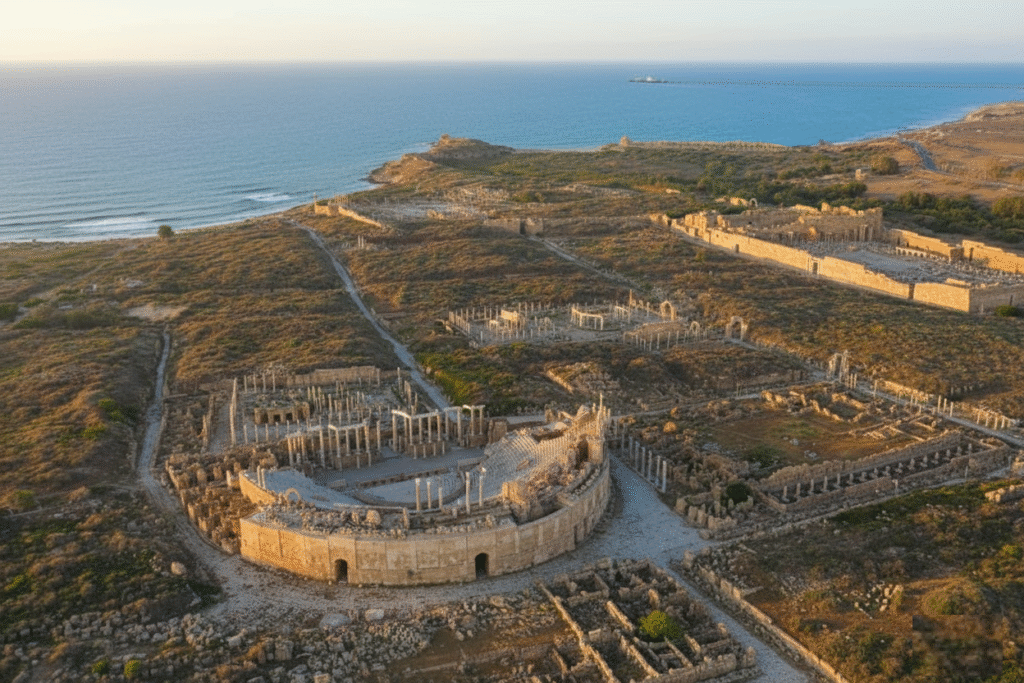
The first thing you notice here is scale. Everything feels enormous, the Arch of Septimius Severus, the grand basilicas, the open markets, and the amphitheatre carved into the earth near the sea.
The Romans didn’t build small, and Leptis Magna proves it.
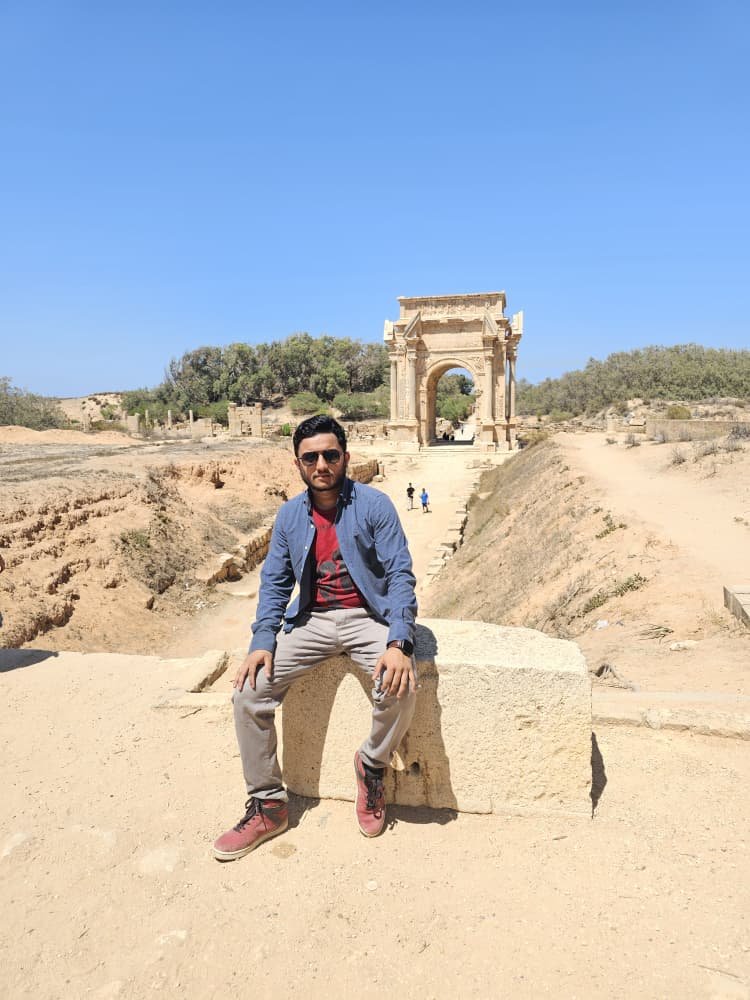
Unlike Sabratha’s Ancient Theatre quiet solitude, Leptis Magna feels alive. You’ll find tourists exploring, local families wandering, and souvenir stalls or cafés near the entrance.
Local tour guides are available too, always eager to share stories of emperors, gladiators, and the city’s golden age.
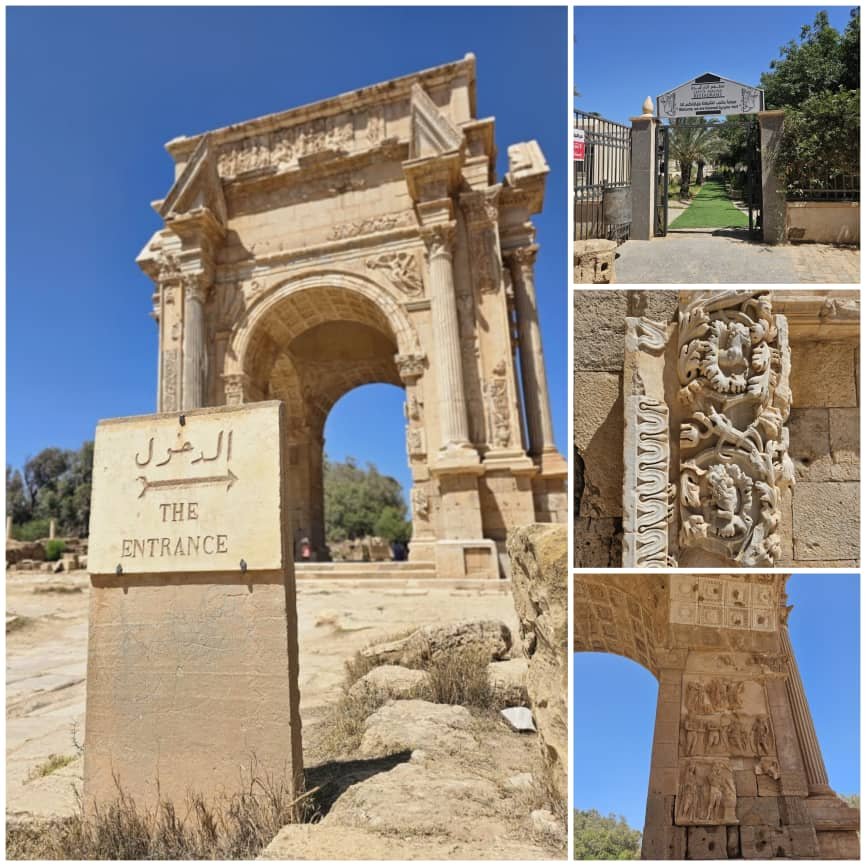
Walking through the ancient streets paved with limestone, you can almost hear the footsteps of history.
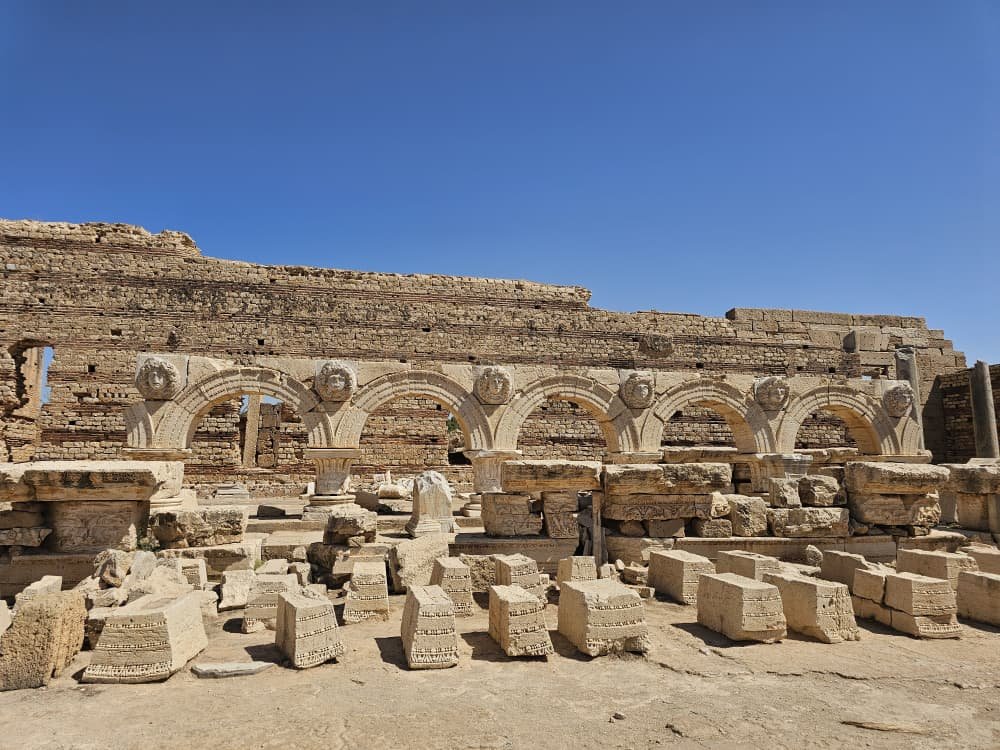
The Severan Basilica rises with a forest of columns, elegant, powerful, and perfectly proportioned. Just nearby lies the marketplace, one of the oldest organized markets in the Roman world, with circular stalls and marble counters still intact.
Then comes the amphitheatre, perhaps my favorite spot. Built below ground level and facing the Mediterranean Sea, it once held around 16,000 spectators. Standing there, the mix of wind, stone, and sea makes you feel time pause for a moment.
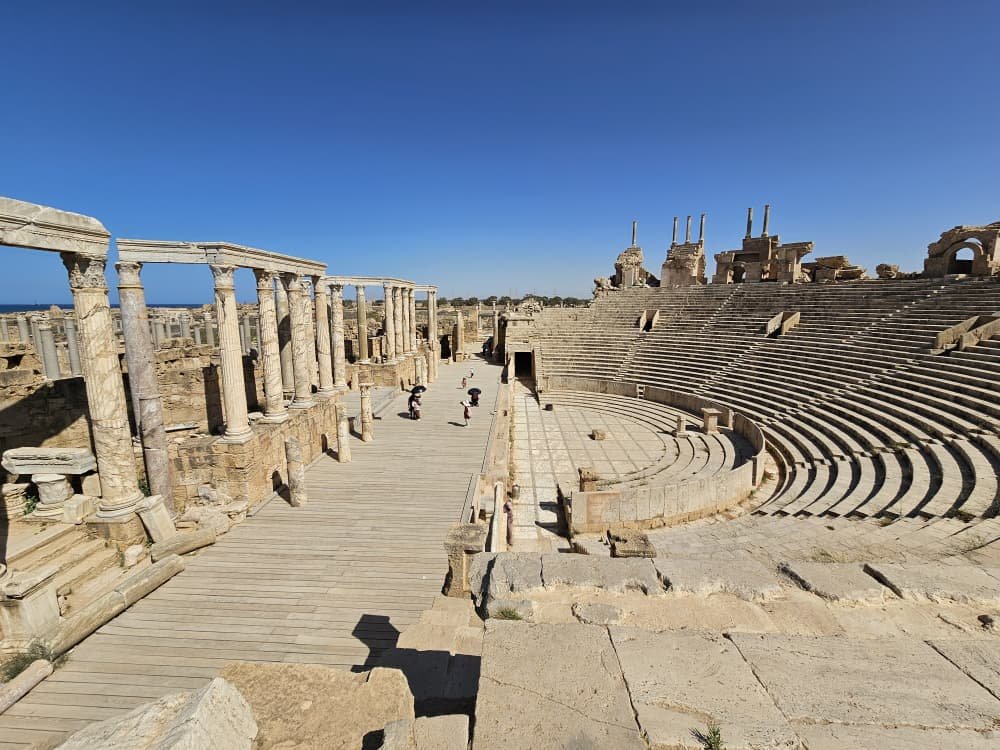
Leptis Magna was once known as the “Rome of Africa.”
It was the birthplace of Emperor Septimius Severus, who turned it into one of the empire’s grandest cities. Even after two thousand years, the ruins still carry the spirit of ambition, art, and empire.
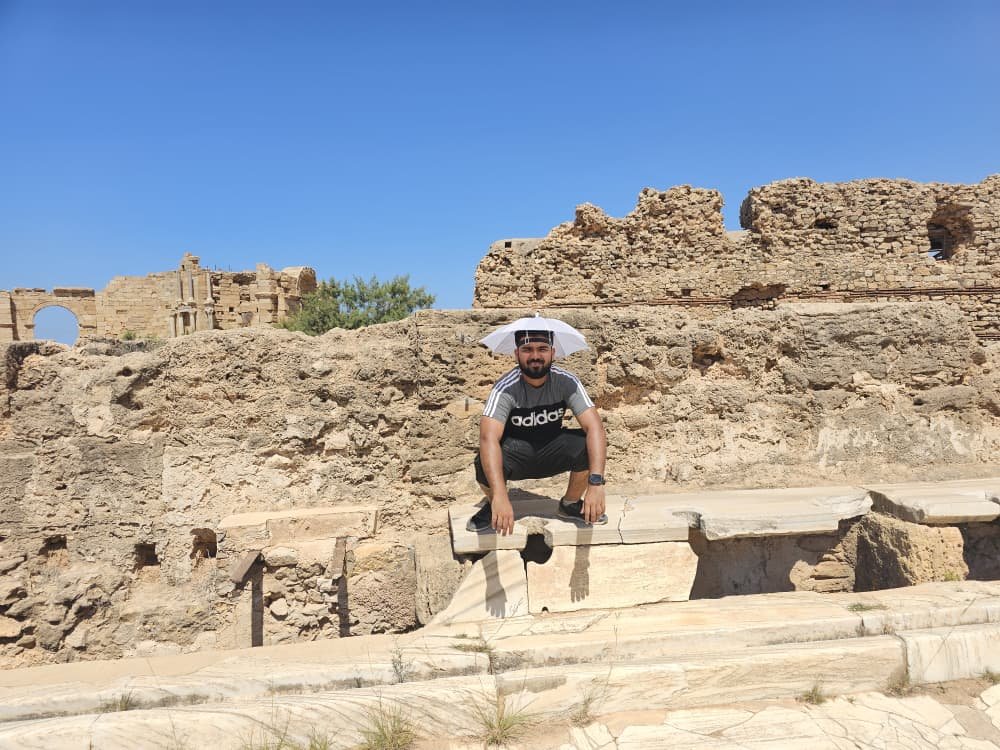
Unlike other ruins, this site is visitor-friendly. You’ll find shops, parking areas, and cafés nearby, so you can easily spend half a day exploring. Just remember to wear a hat and bring water, the Libyan sun is strong even in winter.
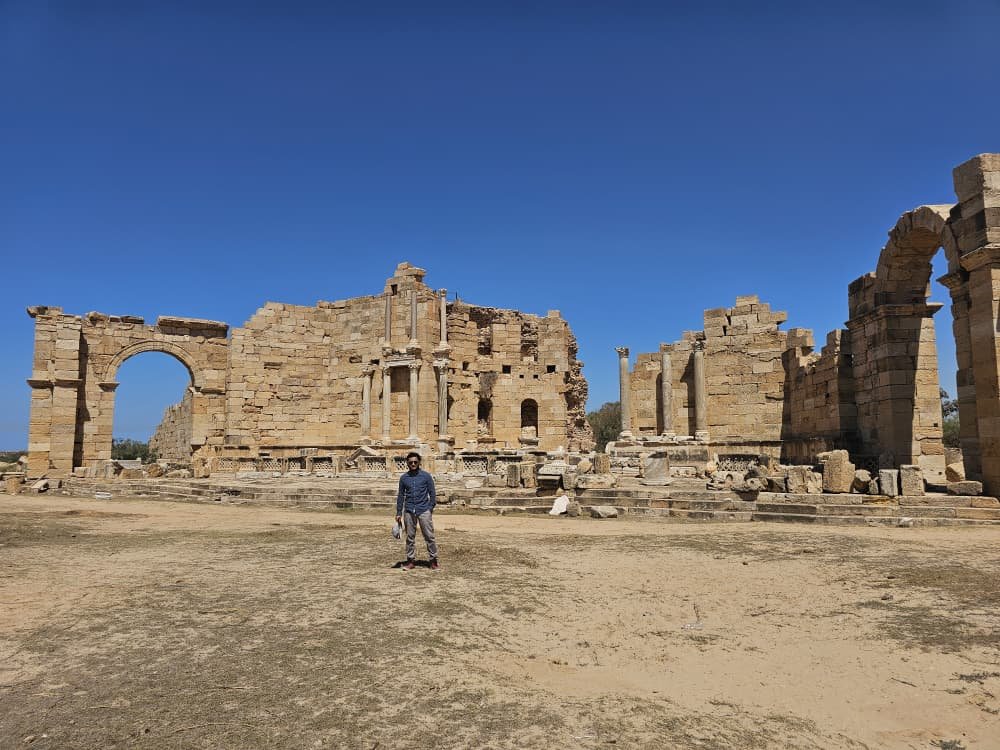
Every corner of Leptis Magna holds a story.
For me, this wasn’t just another visit, it was an encounter with something timeless.
The architecture, the sea breeze, and the light on the stones all come together to remind you how civilizations rise, shine, and leave behind beauty that endures forever.
Leave a Reply