
When I first stepped into the ancient Roman Theatre of Sabratha, it felt like time slowed down. The sea breeze carried echoes of applause from centuries ago, and the towering stone columns stood proudly witnesses to nearly 2,000 years of history.
Sabratha lies along Libya’s beautiful Mediterranean coast, about 70 km west of Tripoli. As I arrived, the ruins stretched out against the sea, a breathtaking combination of history and horizon.
The Roman Theatre immediately stood out with its grand stage, tall Corinthian columns, and tiered seating built from warm golden stone.
When you stand in the center of the stage, you can feel the perfect acoustics a whisper carries all the way to the last row. The Romans truly understood architecture and sound like few civilizations ever have
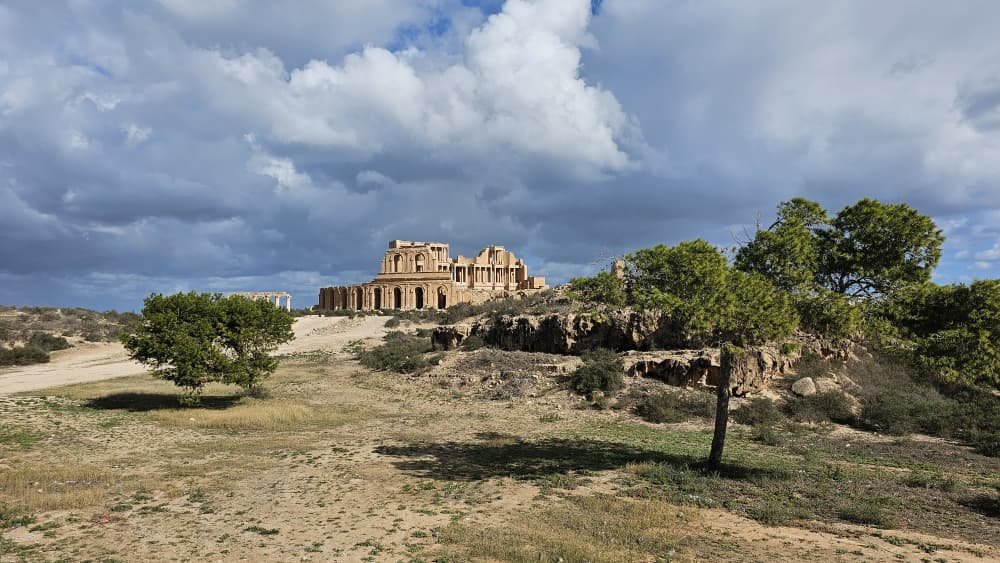
The theatre was originally built around the 2nd century AD, during the time when Sabratha was part of the Roman Empire’s Tripolitania Province, along with Leptis Magna and Oea (modern Tripoli).
It could seat nearly 5,000 spectators, who gathered to watch plays, speeches, and celebrations. Over the centuries, the city flourished as a port trading in olive oil, ivory, and spices, connecting Africa to Rome and the Mediterranean world.
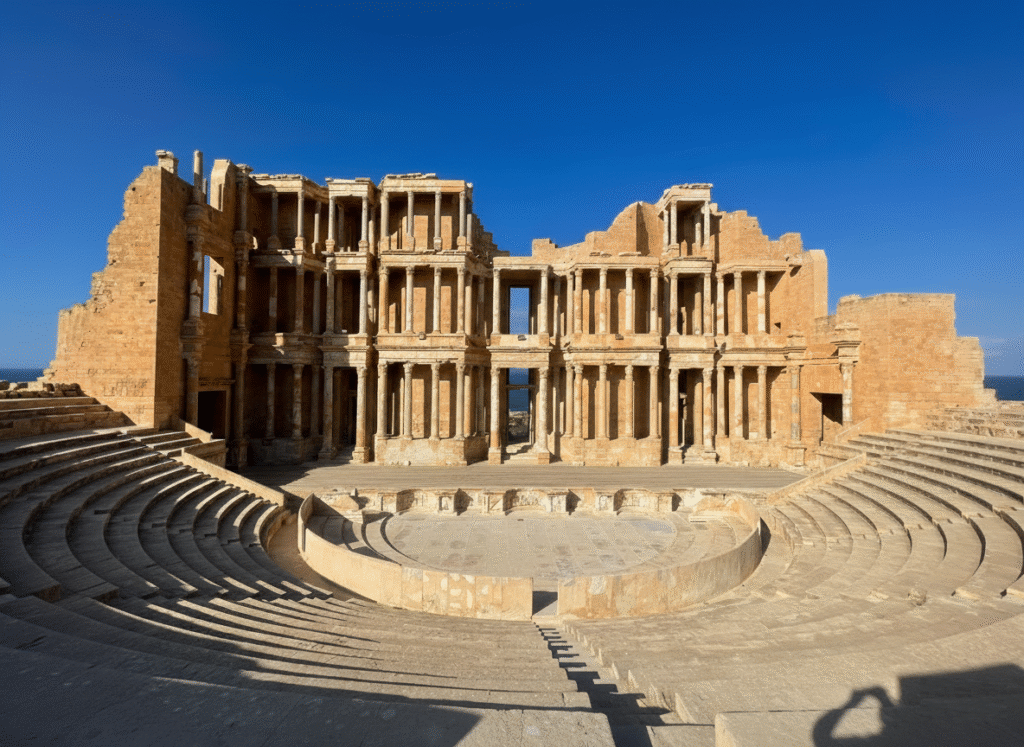
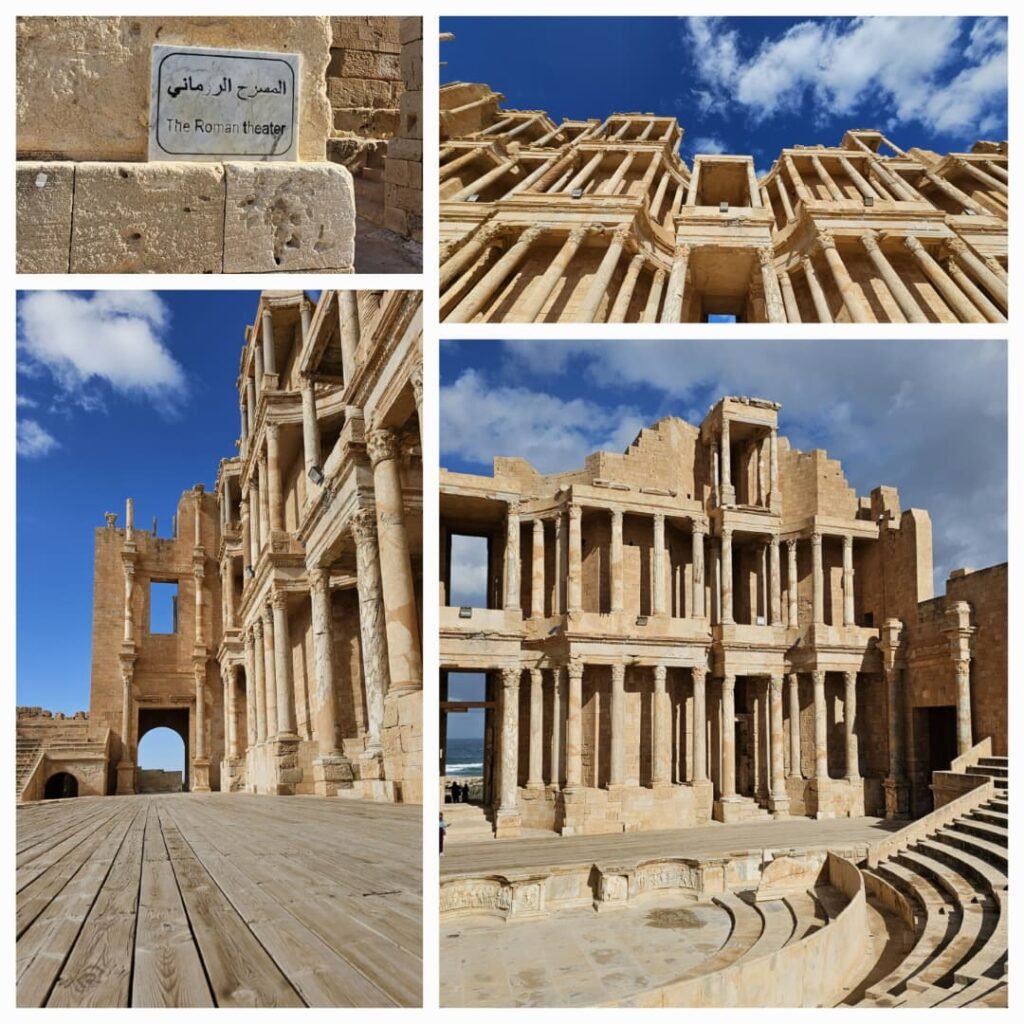
The theatre was destroyed and rebuilt several times due to earthquakes, but what you see today was largely reconstructed by Italian archaeologists between 1927 and 1937, restoring its former glory with remarkable accuracy.
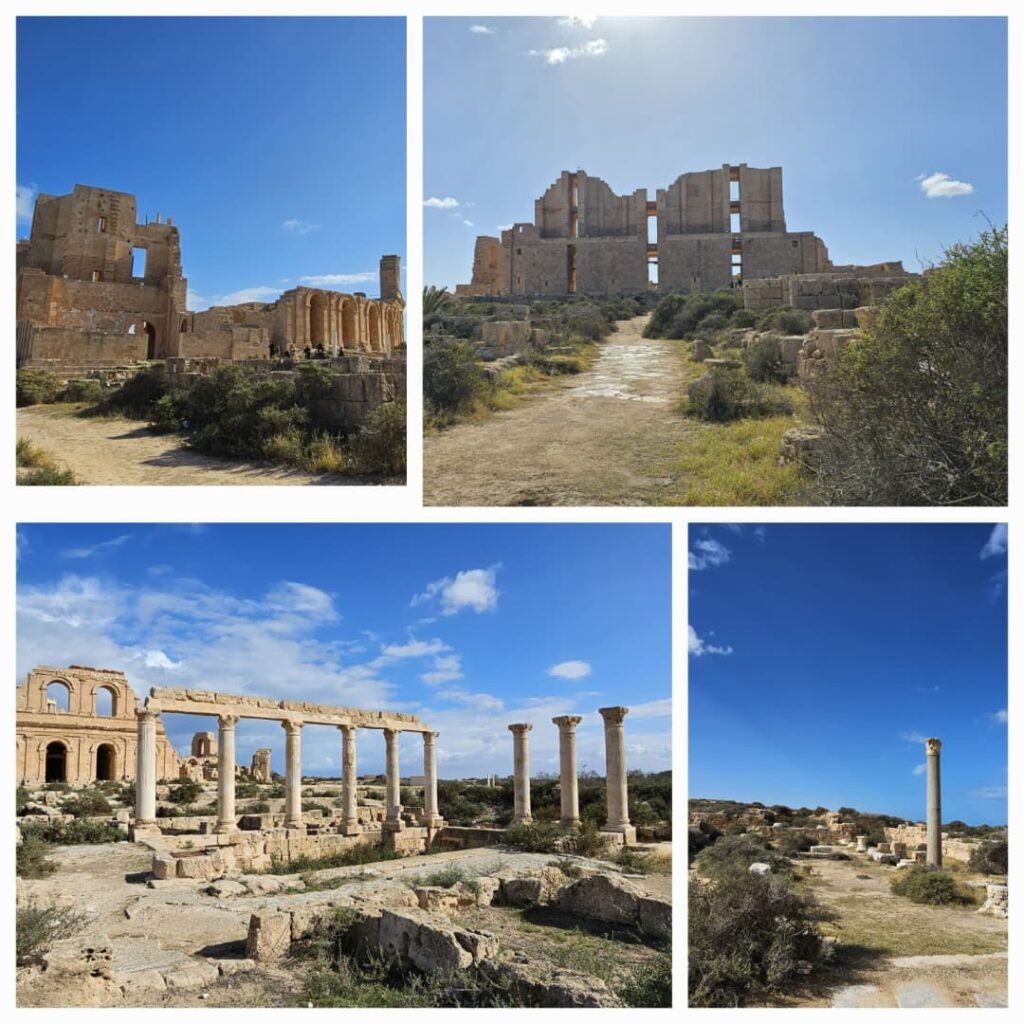
The stage backdrop (known as the scaenae frons) is one of the most beautiful in the Roman world. It’s made of three levels of Corinthian columns, with statues once standing in the niches between them.
Each stone tells a story of Roman craftsmanship, and when the light hits the facade during sunset, it looks almost golden.
What makes Sabratha truly unique is how the ancient city meets the sea. After exploring the theatre, I walked among temples, Roman baths, mosaics, and even the remains of early Christian basilicas.
The Temple of Isis and Temple of Liber Pater show how Roman and local beliefs mixed. You can still see the outlines of ancient streets and columns rising from the sand, all facing the deep blue Mediterranean.
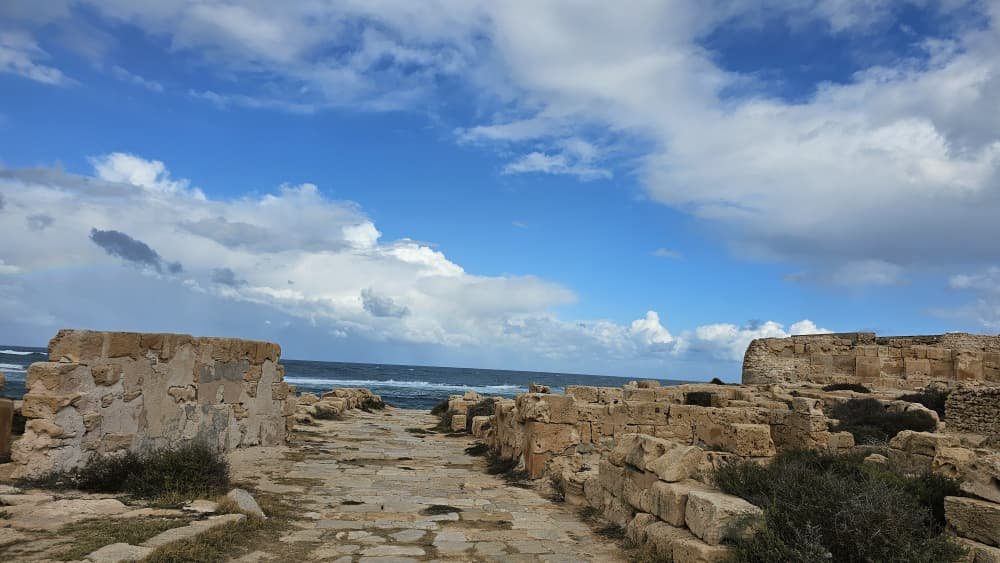
For me, visiting this place wasn’t just about ruins, it was about connection.
Standing there, I imagined the actors performing, the merchants chatting, and the audience laughing almost two thousand years ago. It’s incredible how such places remind us that civilizations rise and fall, but art and culture endure.
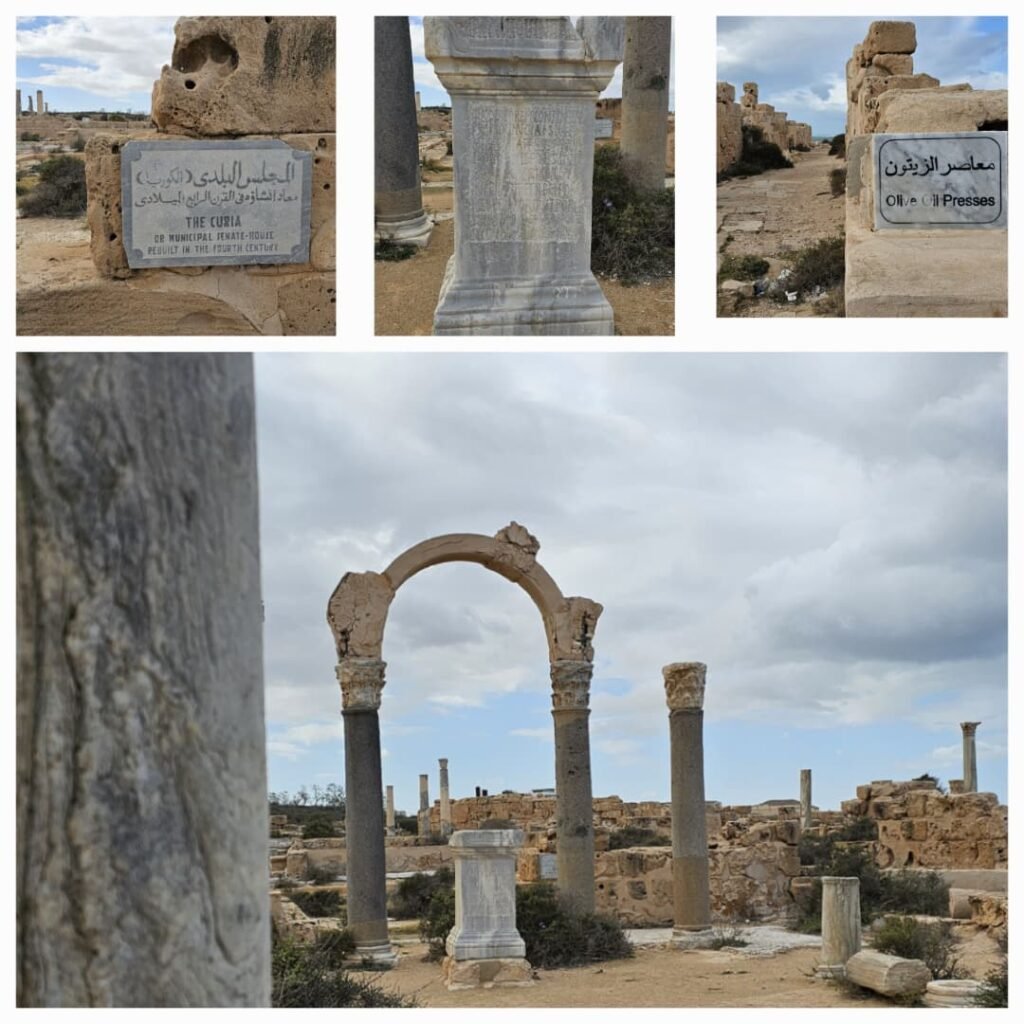
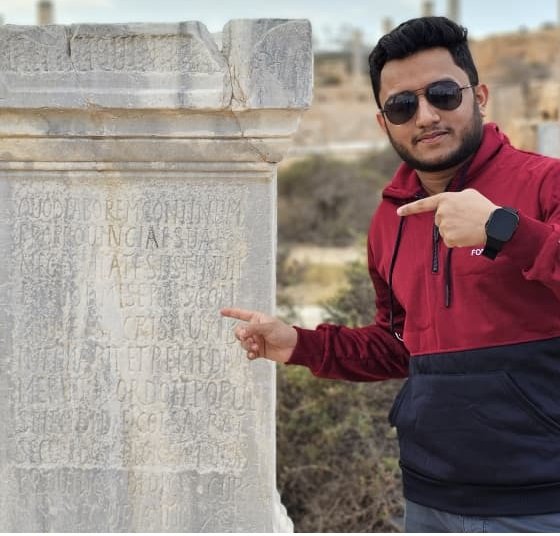
If you ever visit Libya, don’t miss this historical site. Come early in the morning, the golden light makes the ancient stones truly come to life.
This isn’t a very crowded place; you’ll find only a few tourists in this vast area. However, it has great potential to attract many more visitors if the government supports and promotes it. Even finding a tourist guide can be challenging here, but there’s no need to worry about safety, the area is secure, with guards patrolling at all times. Make sure to carry your own water and snacks, as there aren’t any shops nearby.
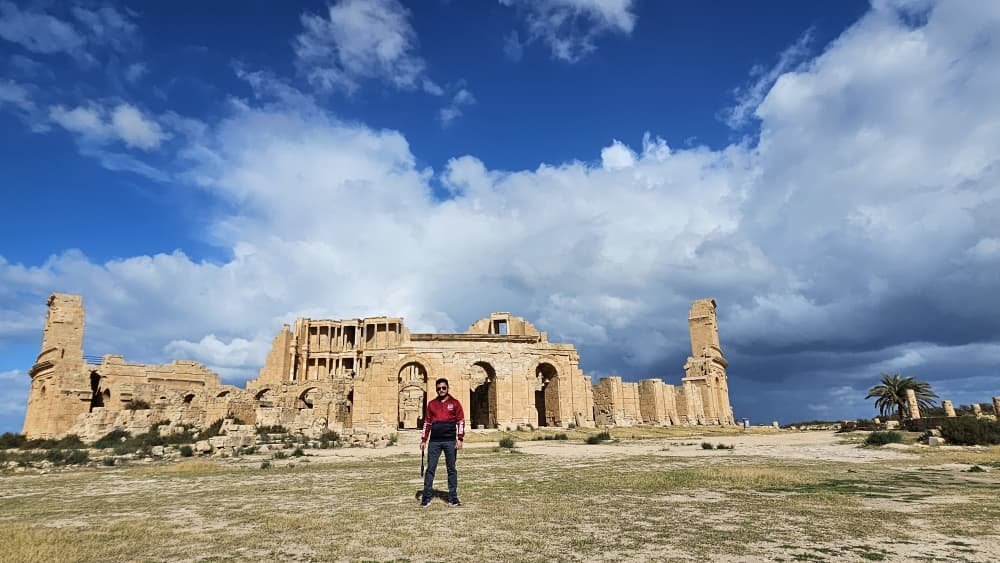
This place is more than an archaeological site, it’s a piece of living history.
And through every photo I took, I tried to capture not just the stones and columns, but the feeling of being part of something timeless.

Leave a Reply